
Publications
Preprints
Key Research Articles
This paper presents a user-centric Vehicle-to-Grid (V2G) framework utilizing a game-theoretic, horizon-splitting strategy to dynamically arbitrate between financial revenue and battery health preservation based on explicit user preference signals. The approach integrates an enhanced semi-empirical degradation model and is validated for robustness and sensitivity under parameter uncertainty against standard multi-objective optimization benchmarks.
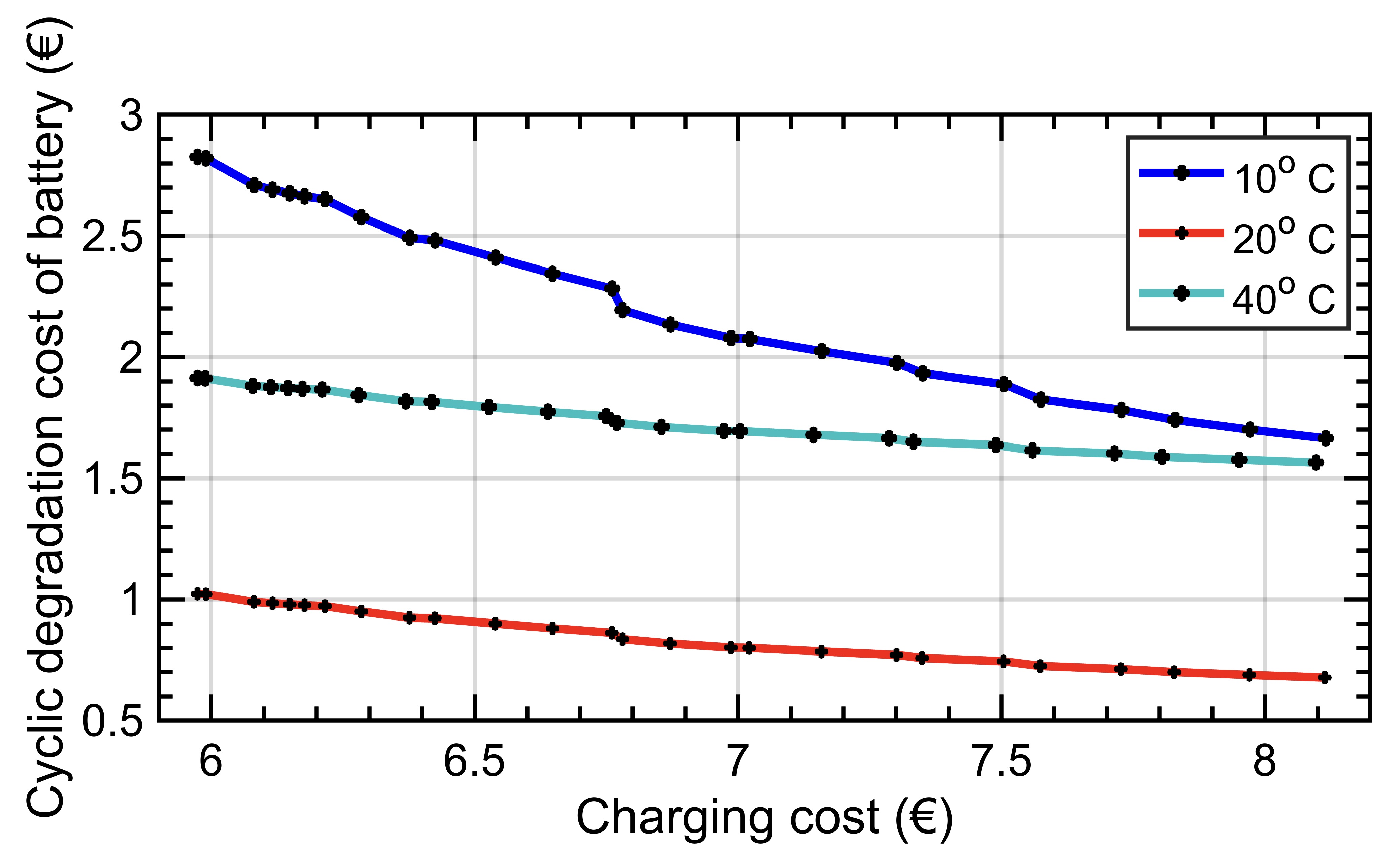
Figure 1: Trade-off curve for comparison between charging cost and cyclic battery degradation cost while taking part in V2G for different ambient temperatures.
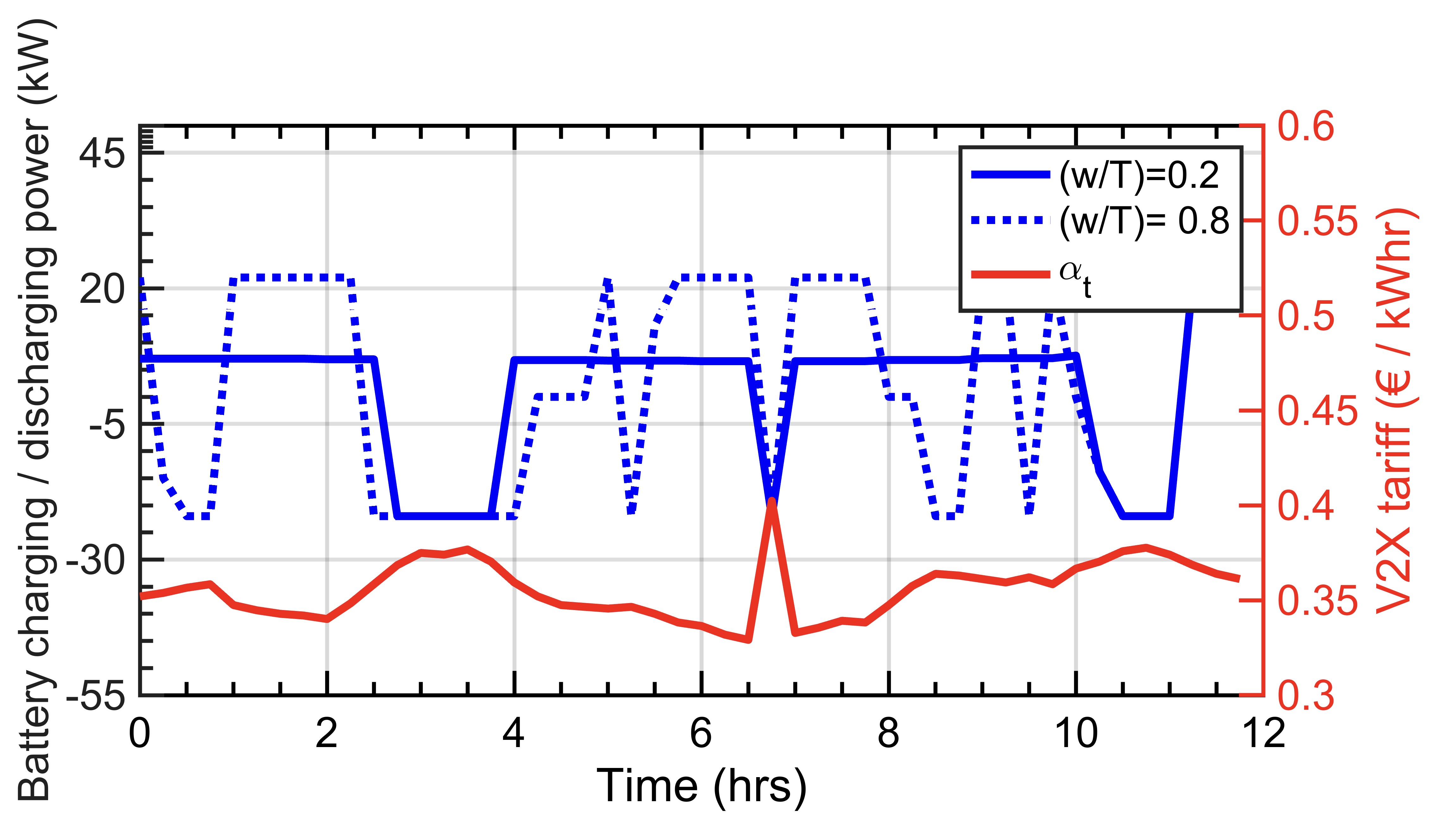
Figure 2: Smart charging profiles for different choices of user-hyperparameter w.
This article proposes a hybrid Model Predictive Control (MPC) framework for DC microgrids utilizing a five-port converter to optimize power sharing among PV, batteries, fuel cells, and supercapacitors while strictly adhering to manufacturer operational constraints. The study validates a hierarchical control architecture—combining supervisory MPC with local PI regulation—through a 2 kW experimental prototype, demonstrating robustness under stochastic generation and load fluctuations.
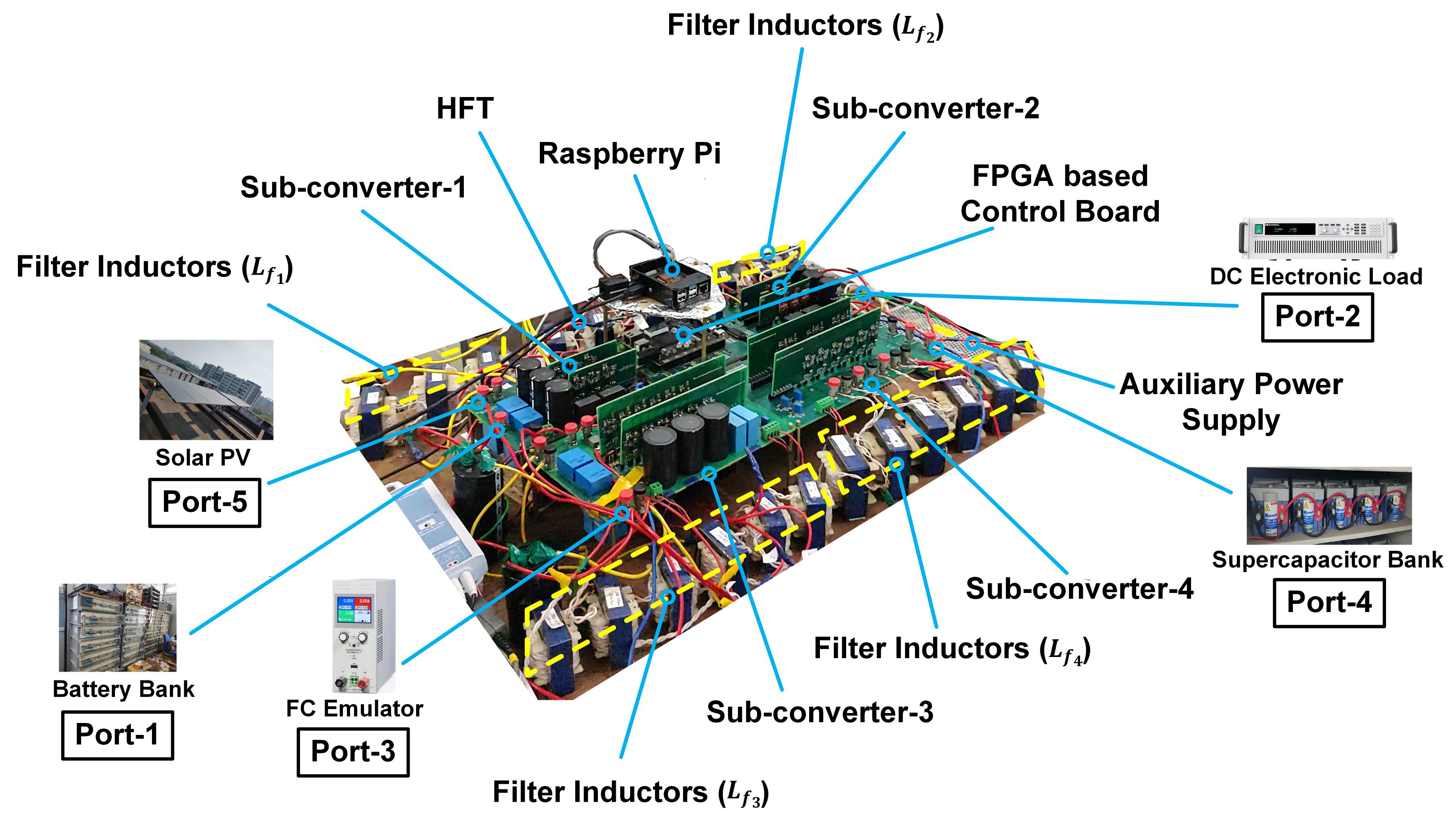
Figure 1: Experimental setup of five-port DC-DC converter.
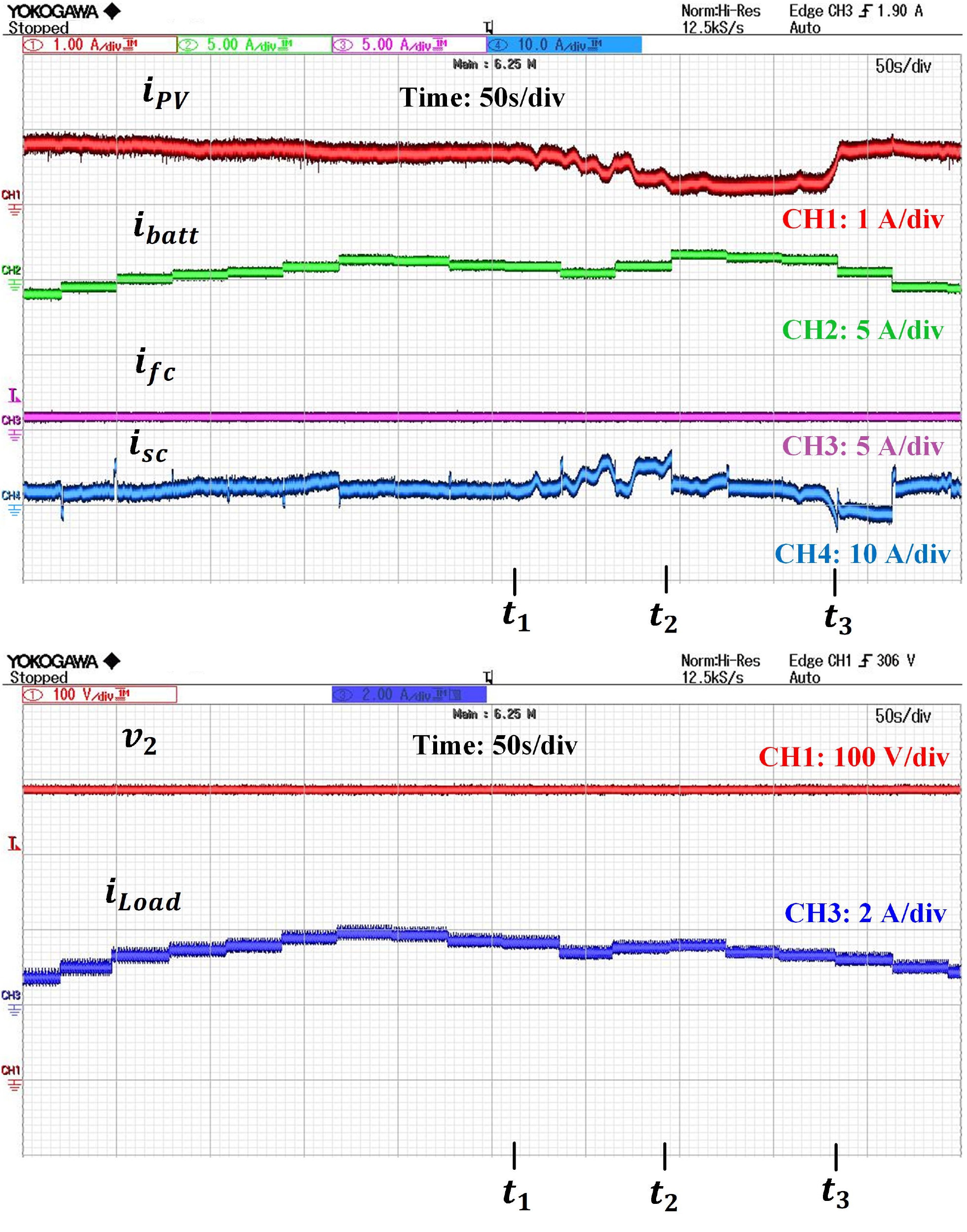
Figure 2: Current profiles of PV, battery, fuel cell and supercapacitor bank (top), load bus voltage and load current profile (bottom)
This paper presents a distributed optimization framework using the Alternating Direction Method of Multipliers (ADMM) to coordinate multiple microgrids for provisioning passive voltage support ancillary services to the transmission grid. The approach introduces novel mixed-integer inequalities to model feasible active and reactive power exchanges, leveraging inverter capabilities and storage flexibility to ensure grid support without centralized control.
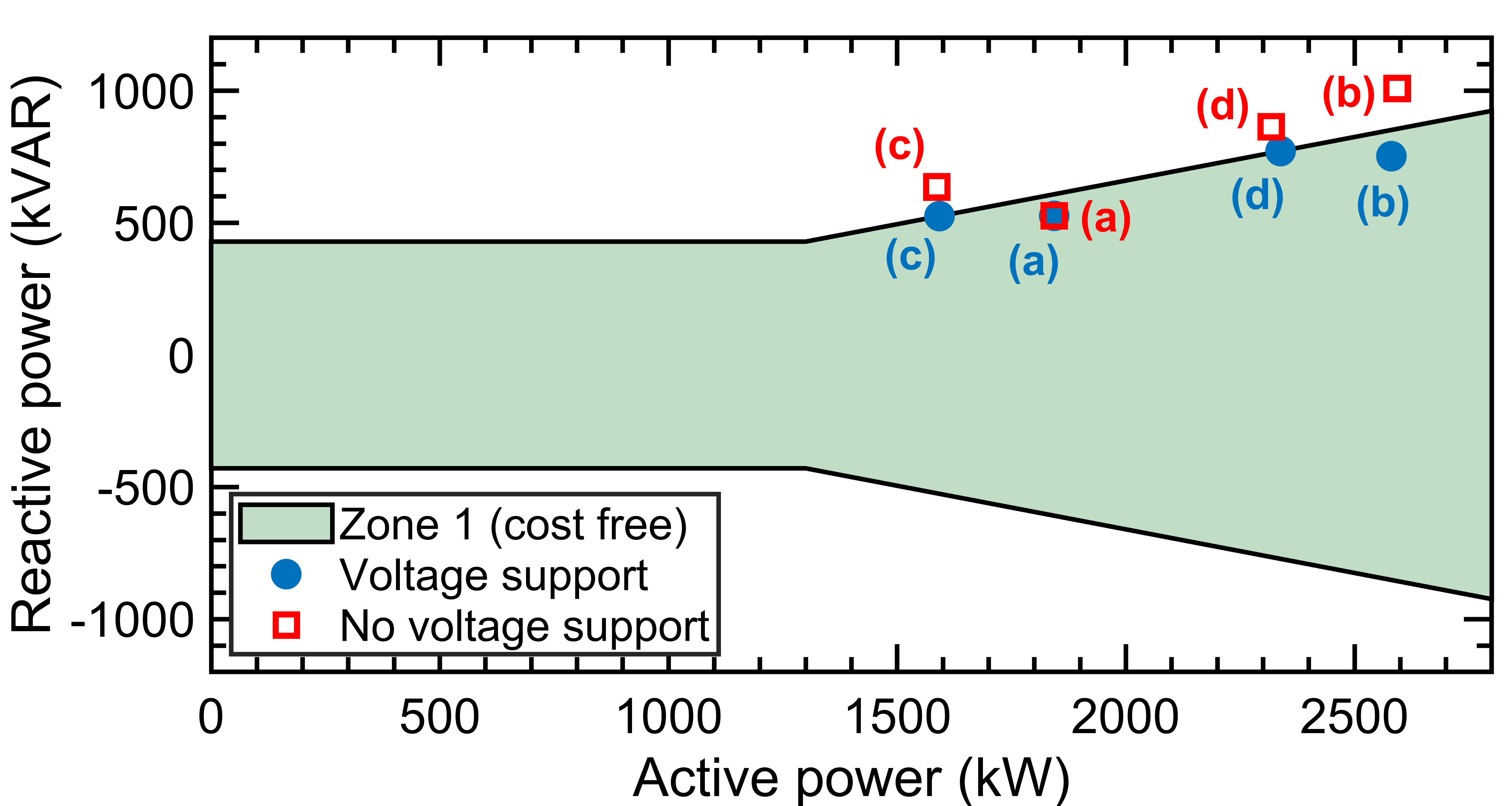
Figure 1: Passive voltage support curve. Our method ensures operation in a penalty-free zone.
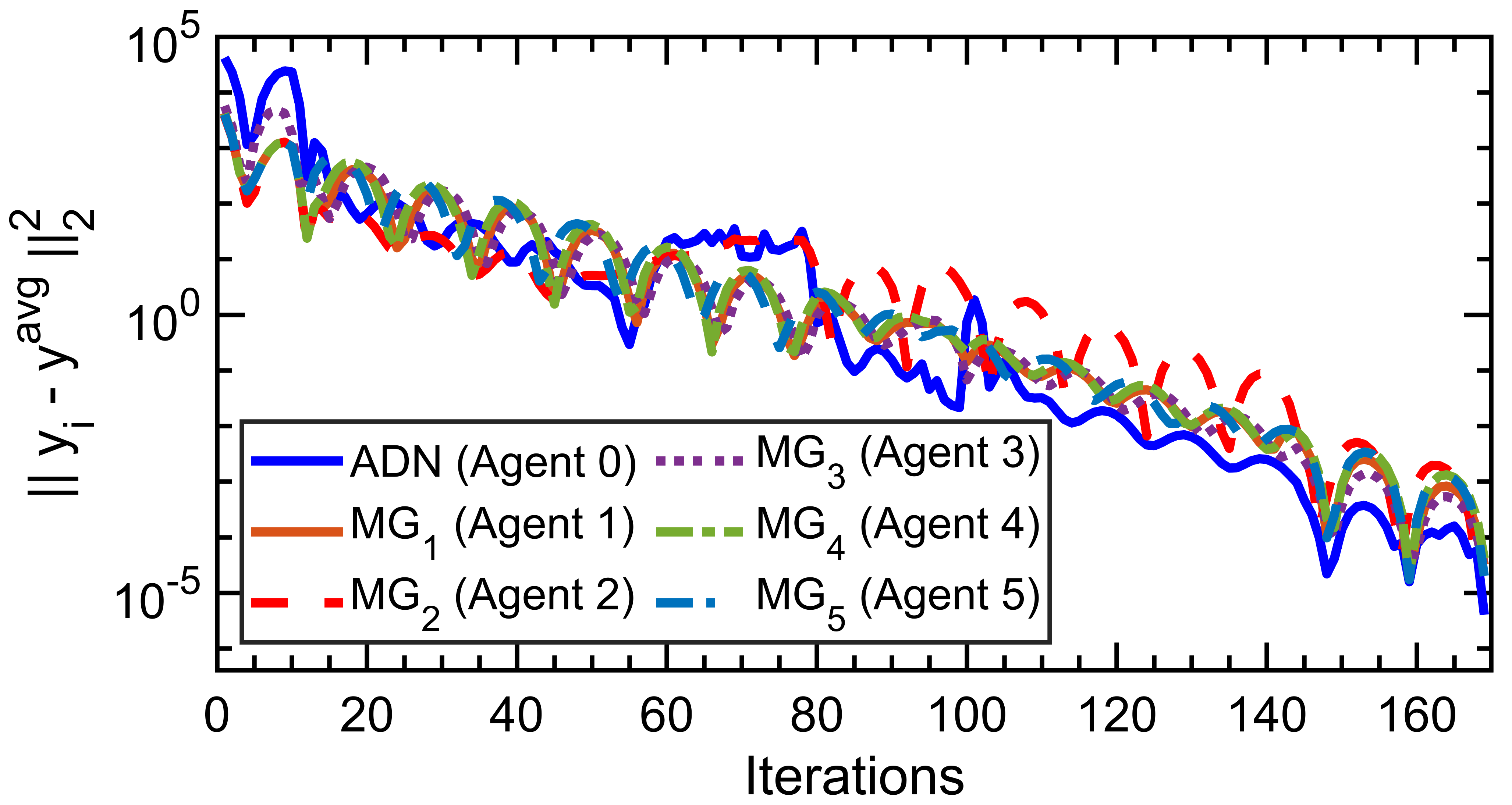
Figure 2: Consensus error going down for all agents.